The short answer: Most of Kenya's best-known coffee grows on the red volcanic slopes around Mount Kenya and the Aberdare Range, in counties like Nyeri, Kirinyaga and Murang'a, at roughly 1,300 to 2,000 meters above sea level.
Why this part of Kenya grows such distinctive coffee
High altitude means cool nights and slow-ripening cherries, which build sweetness and bright acidity. The soils are deep, well-drained red volcanic earth. Rain comes in two seasons, and the main harvest runs roughly from October into December.
| Region | Altitude (approx.) | Often tastes like |
|---|---|---|
| Nyeri | 1,600 to 2,000 m | Citrus acidity and blackcurrant |
| Kirinyaga | 1,300 to 1,900 m | Floral, with cranberry and blackcurrant |
| Murang'a | 1,500 to 1,900 m | Floral, with berry, citrus and blackcurrant |
These are general tendencies. Every farm and every harvest is a little different.
Nyeri
Nyeri sits between Mount Kenya and the Aberdare Range and is one of Kenya's most celebrated coffee counties. Nyeri lots are known for lively, citrusy acidity and a deep blackcurrant sweetness.
Kirinyaga
Kirinyaga lies on the southern slopes of Mount Kenya. Its coffees are often floral and juicy, with berry notes like cranberry and blackcurrant.
Murang'a
Murang'a is on the slopes of the Aberdares. Its coffees tend to be floral and fruity, with berry and citrus notes and a smooth, sweet finish.
How Kenyan coffee is grown and processed
Many Kenyan growers are smallholders who deliver their ripe cherries to a nearby cooperative washing station, often called a factory. There the coffee is pulped, fermented, washed and dried, a method known as washed processing that gives the clean, bright cup Kenya is famous for. Common varieties include SL28 and SL34, prized for flavor, and newer disease-resistant varieties like Ruiru 11 and Batian.
Kahoa's roots in these highlands
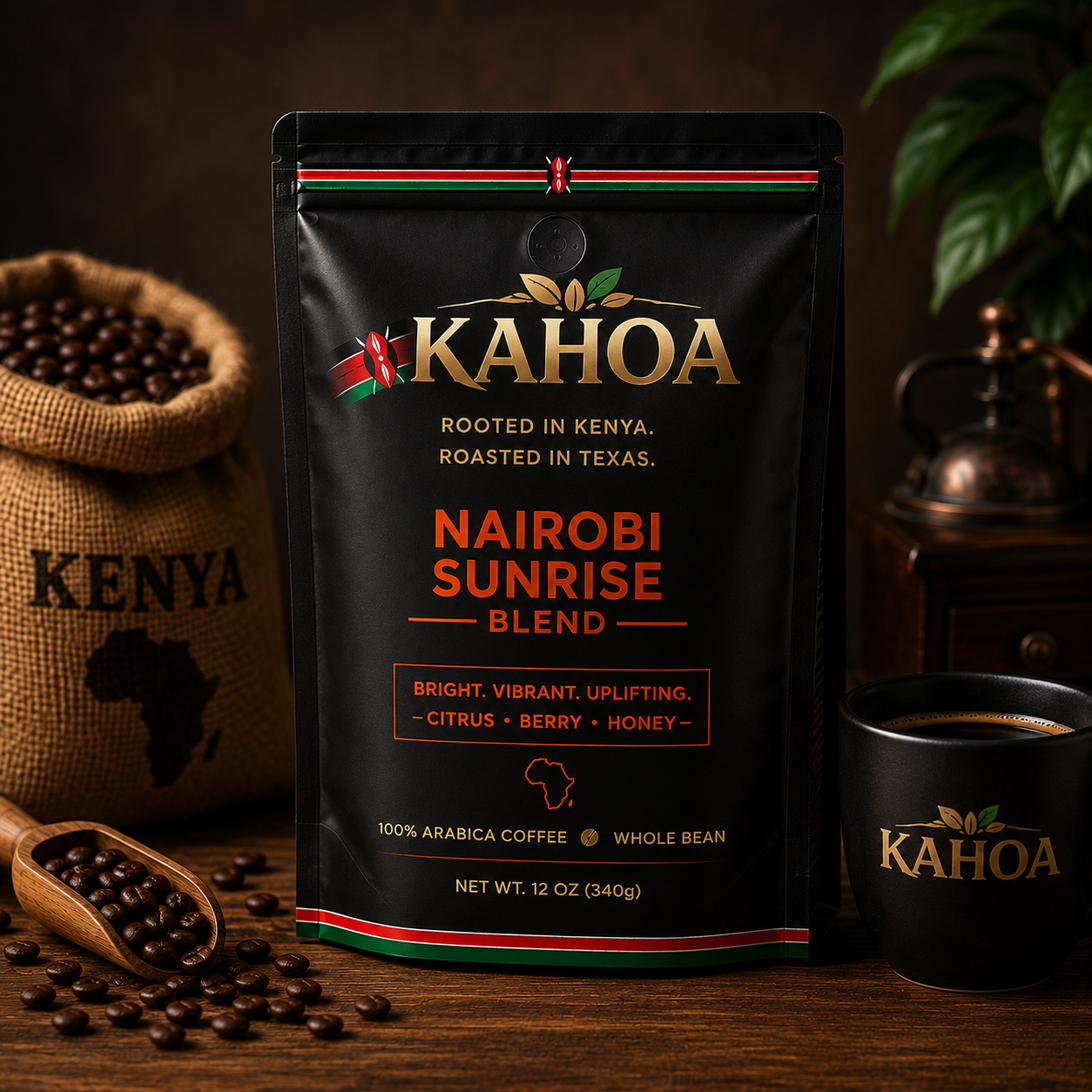
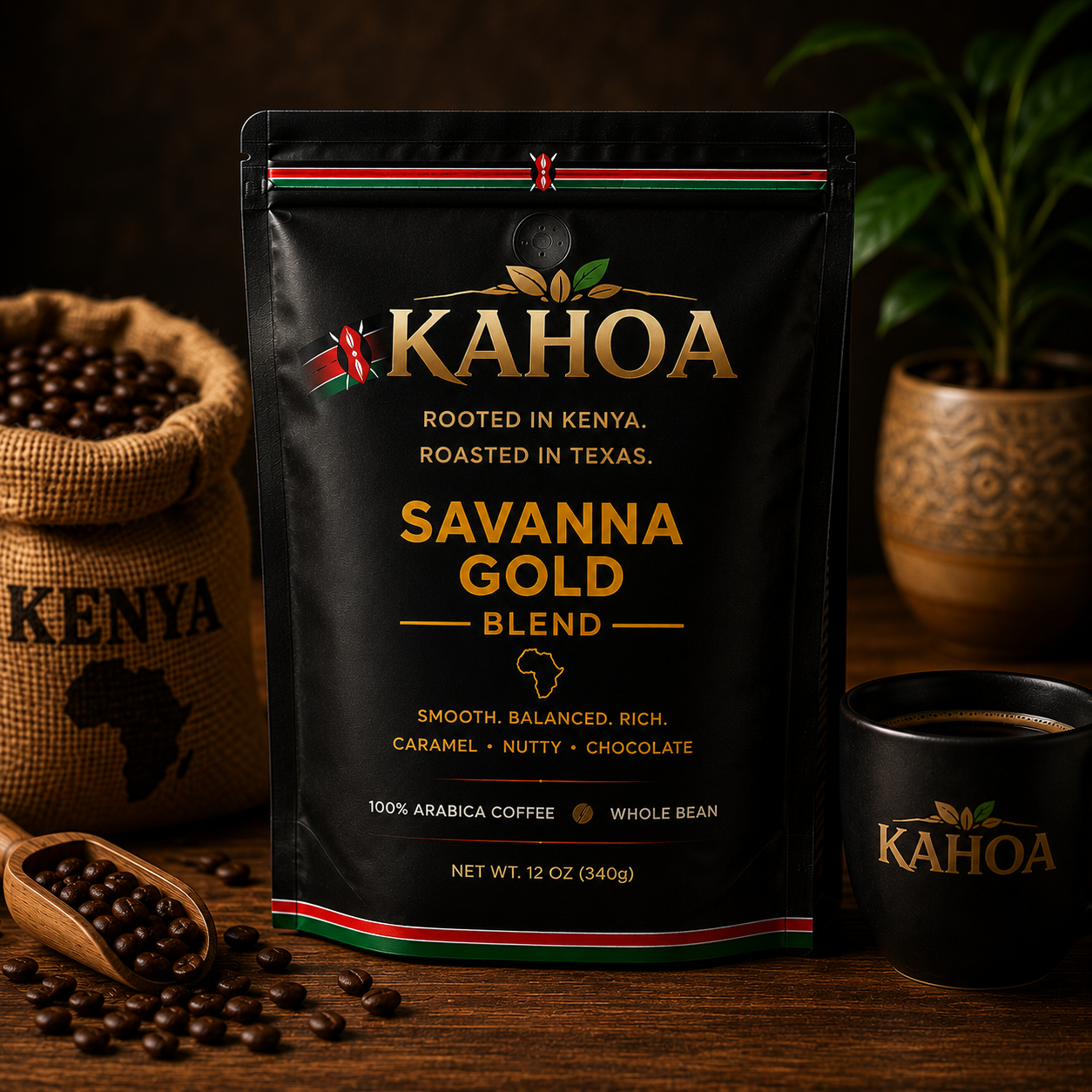
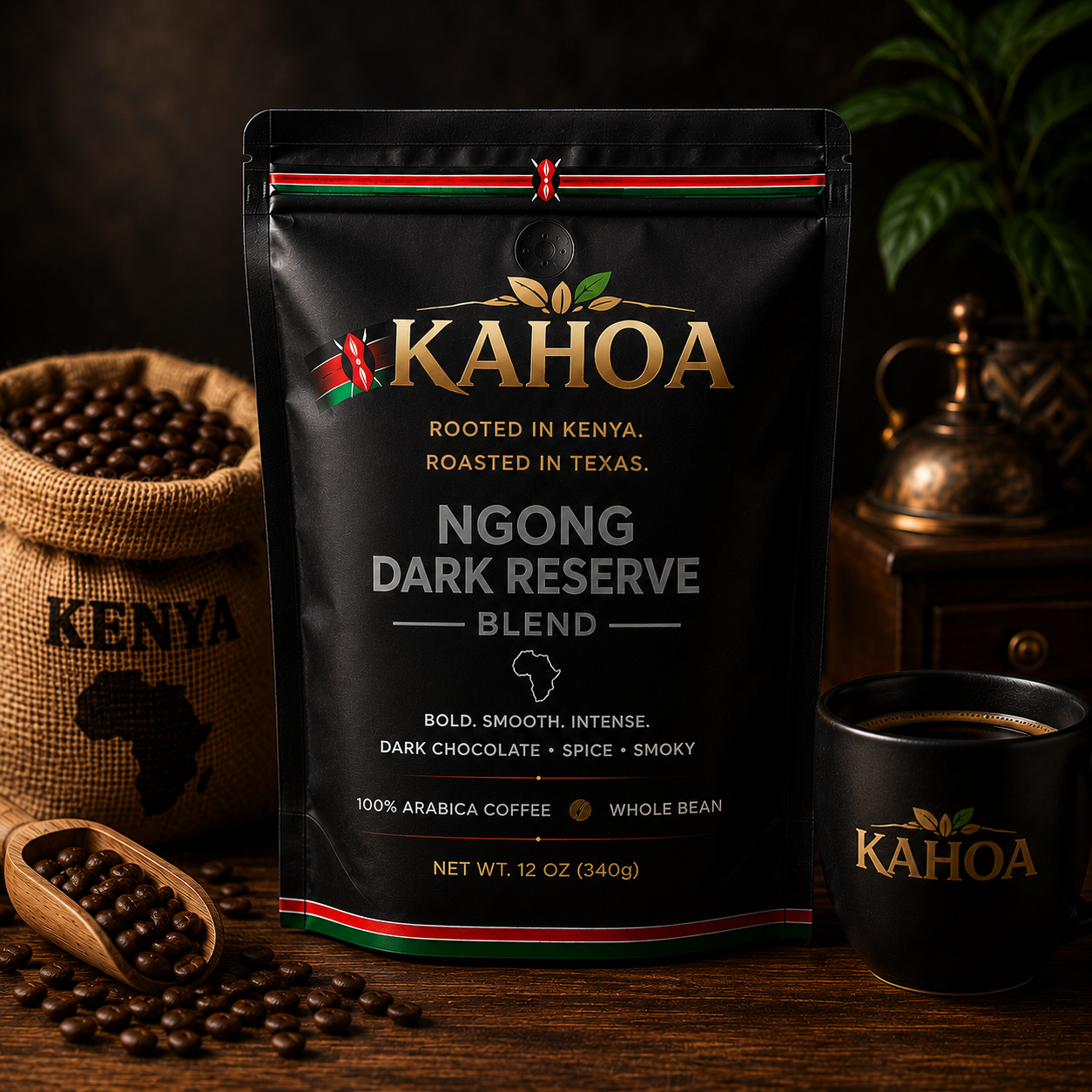
Kahoa sources single-origin Kenyan coffee from farms in Nyeri, Kirinyaga and Murang'a, including our own family farm. Kahoa's founder is the grandson and son of Kenyan highland coffee farmers, and the brand exists to bring that coffee, and its story, to Texas.
Next, learn what Kenya AA, AB and PB mean, or read our story.
Frequently asked questions
Where does Kenyan coffee come from?
Much of Kenya's famous coffee grows on the volcanic slopes around Mount Kenya and the Aberdare Range, in counties such as Nyeri, Kirinyaga, Murang'a, Kiambu and Embu.
What does Nyeri coffee taste like?
Nyeri coffees are known for bright citrus acidity and blackcurrant sweetness. Individual farms and harvests vary.
What does Kirinyaga coffee taste like?
Kirinyaga coffees are often floral and juicy, with berry notes such as cranberry and blackcurrant.
What is a coffee factory in Kenya?
A factory is a cooperative washing station where many small farmers bring their ripe cherries to be pulped, fermented, washed and dried.
What altitude is Kenyan coffee grown at?
Most of Kenya's specialty coffee is grown at roughly 1,300 to 2,000 meters above sea level, which helps build sweetness and acidity.
Where does Kahoa source its coffee?
Kahoa sources single-origin Kenyan coffee from farms in Nyeri, Kirinyaga and Murang'a, including the founder's family farm in the Kenyan highlands.